Bob’s Backyard Birds

1
In response to the urging of many friends, I’m publishing this web site of photos of the birds that visit
my backyard. I haven’t much of a plan for its design, so I think I’ll just add the pictures in more or less
alphabetical order; I’ll start with “blackbird” and end with “woodpecker,” except that I’ll add more pages
when I photograph new birds. Like anyone, I like certain birds more than others, so I’m sure that you’ll
see more of some species and others...that’s the way it goes! And I’m including the scientific names and
dates the photos were taken, because I just happen to like to do it that way.
I should also mention that, when I get better photos of the birds that I have on these pages, I swap
out the ones that aren’t as good with the ones I think are better shots, so this site will constantly be
changing. And when I have more good shots than fit on one page, I’ll add another page to the end.
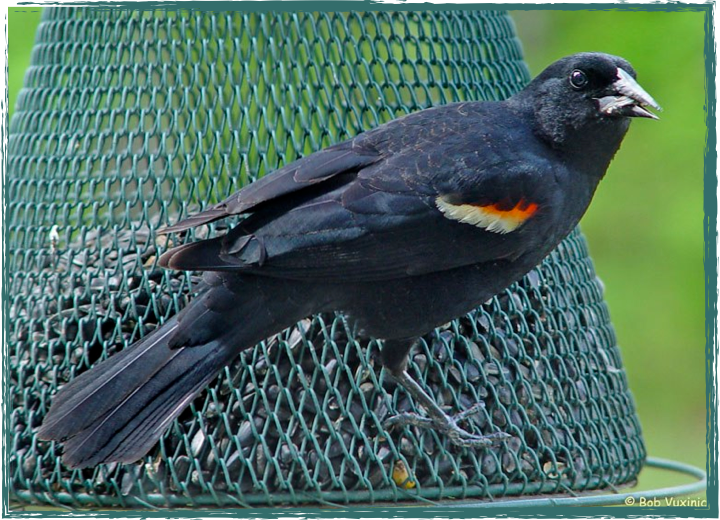
Here’s a bird everybody knows, the male Red-winged Blackbird (Agelaius phoeniceus-10MAY06).
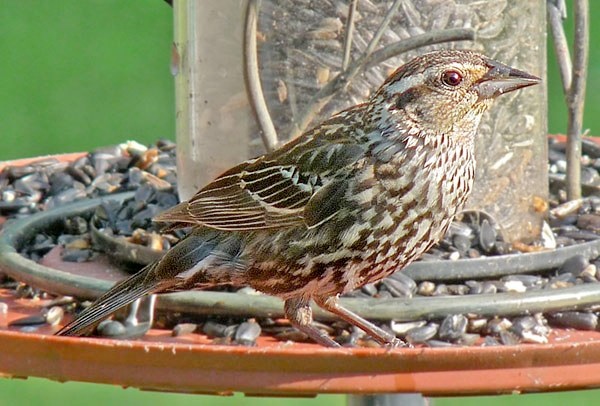
Below is a bird that you might never have seen, a FEMALE Red-winged
Blackbird. Or, if you have seen one, you might not have known what it
was. While the male visits the feeder quite often in the Spring when
they are in the area, it’s a rare to get a shot of females.


It occurred to me that it might be helpful to first identify where I live, so I’m including a little map.
I’m between the cities of Monterey and Crossville, Tennessee, near mid-way between Nashville and
Knoxville, and about 2000 feet in elevation on the Cumberland Plateau.



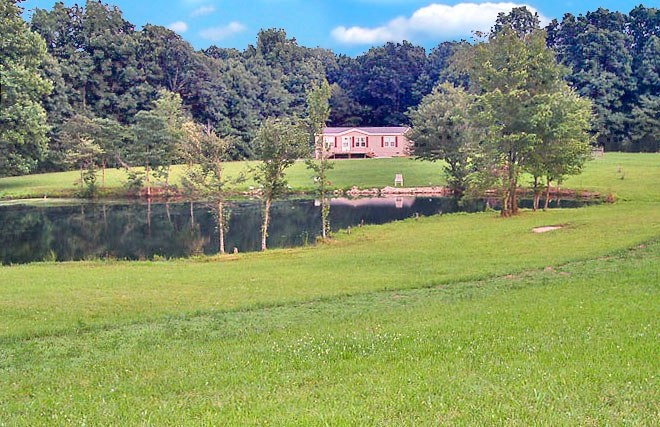
My house sits about 900 feet from the road with a meadow and pond between,
and is bordered behind and on one side by mixed hardwood and pine woods.
If you are interested in a specific bird you can click on the page number button above that corresponds to this index:
1–Blackbird
2–More Blackbirds
3–Blue Jay
4–Bluebird
5–Bunting
6–Cardinal
7–Carolina+House Wren
8–Chickadee
9–Cowbird/Crane/Dove
10–Canada Geese
11–Goldfinch
12–Grackle/Grosbeak-1
13–Grosbeak-2
14–Blue Heron
15–House Finch
16–Purple Finch
17–Hummingbird
18–Dark-eyed Junco-1
19–Dark-eyed Junco-2
20–Killdeer/Mockingbird
21–Purple Martin
22–Nuthatch
23–Pine Siskin
24–Pine Warbler/Field Sparrow
25–Chipping Sparrow
26–Song Sparrow
27–White-throated+Other Sparrows
28–Tree Swallow/Vulture
29–Tufted Titmouse
30–Downy+Hairy Woodpeckers
31–Red-headed Woodpecker
32–Red-bellied Woodpecker
33–Pileated Woodpecker
34–Winter feeders
35–Eastern Towhee
36–Eastern Meadowlark
37–Robin
38–Tanager/Phoebe/Wood Pewee
39–Eastern Kingbird
40–Yellow-bellied Sapsucker
41–Hawks
42–More Cardinals
43–More Carolina+House Wrens
44–More Chickadees


© Bob Vuxinic
31 MAY 2011




Here’s a male with his dander up!
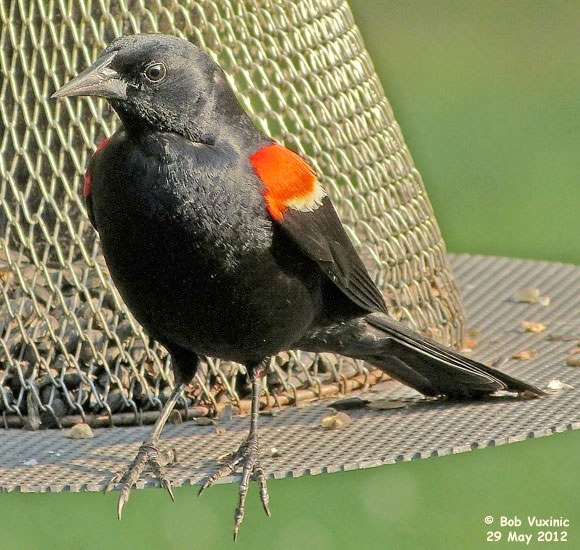
I’ve been surprised to only have visits from one at a time, when it’s normal (if you read
the book) for them to travel in flocks. Notice that the red epaulets are barely visible,
which is the most common appearance. When the bird is relaxed the red recedes under
the outer feathers. The more red you see, the more agitated the male bird is.


~~~~~~~~~~~~~~~~~~~~~~~~~~~~~~~~~~~~~~~~~~~~~~~~~~~~~~~~~~~~~~~~~~~~~~~~~~~~~~~~~~~~~~~~~~~~~~~~~~~~~~~~~~~~~~~~
