Bob’s Backyard Birds
37

Oh my gosh; I’ve constructed this entire web site and forgot to include our good old American Robin! I

guess that is because I see them as often here as I used to see pigeons in Chicago. The taxonomic name

for the American Robin is Turdus migratorius, or “migratory Thrush,” but they aren’t migrating

harbingers of Spring in Tennessee – I see them out in the meadow all year round.

My photographic history:

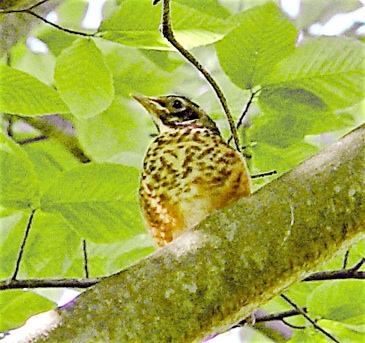
I did snap a photo of one way back on May 12, 2006.

It was a juvenile that caught my attention by flying

up into a tree as I approached. Robins don’t normally

fly into the trees if they are wary of your approach;

they usually just hop a little farther away.

And, following my habit, it seems, of only

capturing unplanned Robin photos, I happened to

be carrying my camera on the way to the road

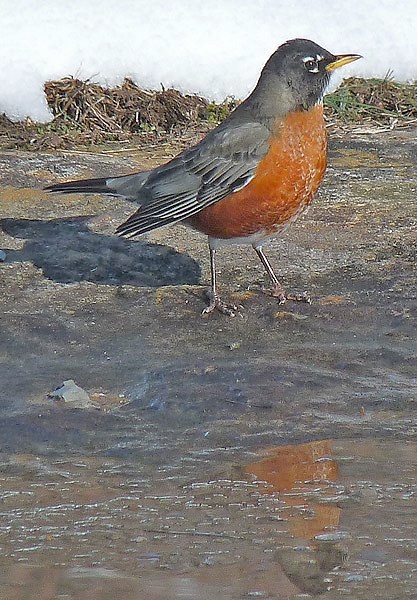
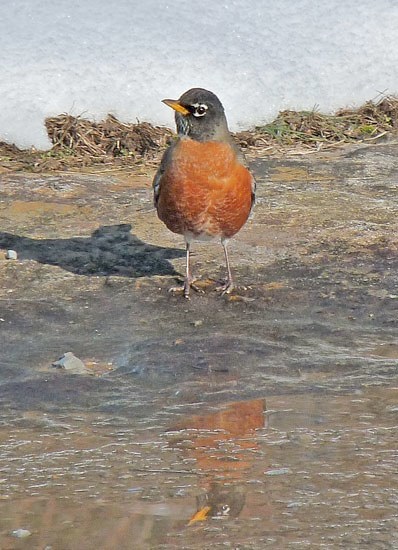
to get the mail on January 13, 2011, when I

saw this fellow grabbing a drink of water from

some of the melted snow on a slab of ground

level stone. It was seeing the bird and his nifty

reflection that caught my eye in this case.

Then I got this long shot on a very hot day

in August of 2009. It was unusual because

there were 5 juvenile birds having a great

time in my improvised birdbath, being

watched over by one adult (upper right).

When I finally had a chance to sit

in the yard and watch the Robins,

I noticed a consistent set of

postures and they hunted for

worms, as demonstrated in these

three shots from March 13, 2011.


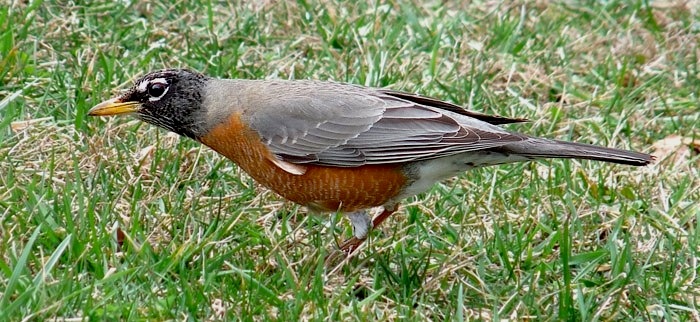
First, each would stand erect, as

if getting a good look at the

surrounding terrain.

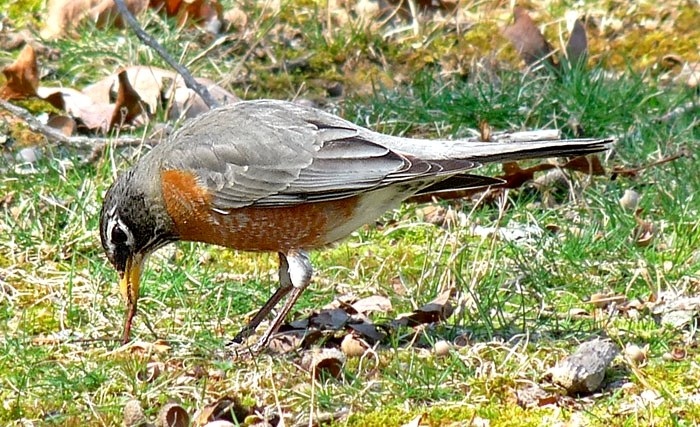
When they detect a target, and they crouch down and stretch out horizontally.

And then they pounce and dig into the ground to bring up their snack,

before moving ahead and repeating the sequence over and over.

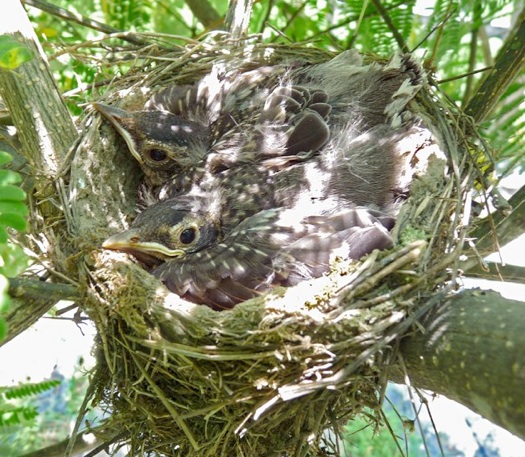
On 29 July, 2011, I was able to snap this pair of shots

of a Robin’s nest with a pair of nestlings just a few days

away from fledging. Their older brother had already left

the nest. This late in the year, of course, means that

this was the the second brood for the parent Robins.